
The £100 Family Dinner Dilemma
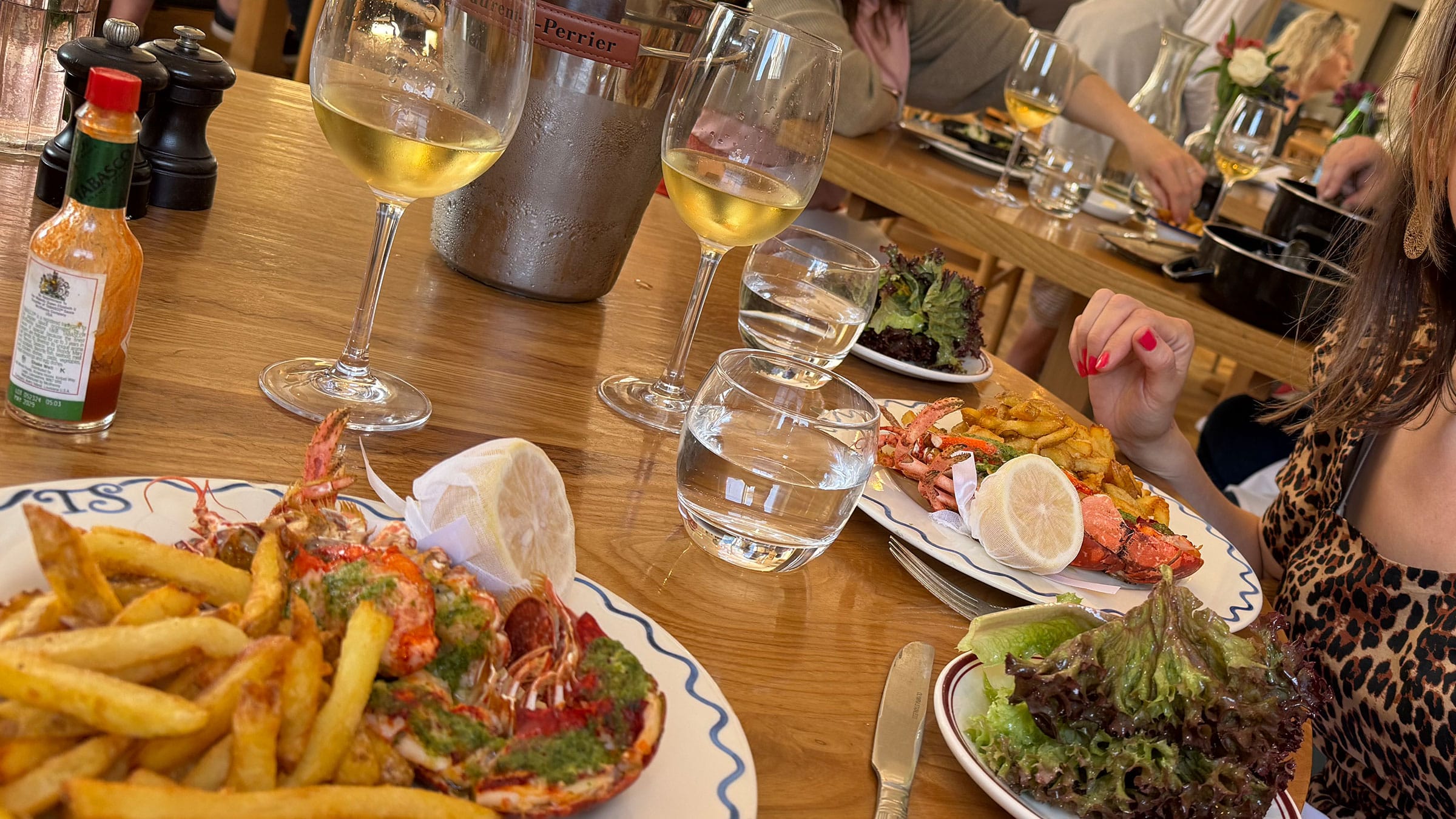
As a family of 3, there is nothing we like more than going out for lunch or dinner together. However, the cost to do this now is surprisingly close to £100 every time. And this got me thinking. At what point does the cost of eating out change how we judge the experience? Because I don’t think the problem is necessarily the £100 itself. It’s what we expect that £100 to buy us.
As New Business Director at Eat with Eyes, I spend a lot of time thinking about the relationship between food, brand and the overall hospitality experience. It’s something I consider not only as a customer, but also in terms of what it means for our clients and the restaurants I love to visit. Of course, restaurants aren’t increasing their prices without reason. The cost of food, wages, energy, rent and business rates has risen across the board, and menu prices reflect that. Lumina Intelligence found that same-line dish prices rose by ‘3.5% in chain restaurants and 4.2% in pubs and bars between 2024 and 2025, well ahead of CPI'(1).
But customers don’t really experience inflation as a percentage, they experience it when the bill arrives. And when that bill starts nudging £100, I think we begin to look at the whole experience a little differently. Was the food good? Was the welcome warm? Did the kids enjoy it? Was the service up to scratch? Did we try something new? Most importantly, did we leave feeling we’d had a good time?
Because at that price, we’re not just comparing one restaurant with another. We’re comparing the whole experience with the alternative: staying at home. And staying at home has become a pretty serious competitor.
The competition from the comfort of home
M&S currently has a Pizza Night Dine In for £14, with two wood-fired pizzas and two sides, designed to serve four. M&S says it has ‘sold more than 200 million Dine In deals since launching the proposition in 2008’(2), with restaurant-quality food at home at the heart of the offer. Waitrose has similar propositions, including a premium meal for four for £18, alongside other meal deals and premium takeaway-style options. Not to mention all the other supermarkets. They all have their own offer or deal to compete for our attention and money.
Of course, it’s not the same experience as going out, but that’s the point. At home, you’ve got your own drinks, no parking or taxi to worry about, no waiting for a table, no service charge and no concern about the kids being too noisy. You can stick Netflix on afterwards or watch the football. It’s easy, comfortable and considerably cheaper.
So, if restaurants are asking families to spend close to £100, what makes that decision feel worthwhile?
Value isn’t the same as cheap
Value isn’t the same as cheap. YouGov’s 2025 casual dining value ranking offers an interesting insight here, with Harvester, Pizza Express and Nando’s among the leading brands for perceived value for money. ‘Harvester scores 16, Pizza Express 14.1 and Nando’s 12.7’(3), significantly ahead of most of the other brands measured. They’re very different businesses, with different menus, price points and experiences. But they all have something in common: customers broadly understand what they’re getting.
You know what Nando’s is all about. You know what to expect from Pizza Express. And you have a pretty good idea of what a family visit to Harvester will involve. That familiarity matters. Customers can see where the value lies before they’ve even ordered. It doesn’t necessarily mean these brands are the cheapest. It means their proposition is easy to understand, and the experience has a recognisable shape. That’s a much more interesting way of thinking about value than simply asking whether a dish costs too much.
And it’s worth remembering that people still want to treat themselves, too. Hawksmoor co-founder Will Beckett has talked about the easing of the focus on lower-priced dining, with dinner trade and later-evening bookings growing. The group’s turnover rose from ‘£100.4m to £109.8m in 2025’(4). Set menus, Sunday roasts and competitively priced options still have a role to play, but there is clearly room for something beyond the cheapest possible meal. People still want to go out, socialise and enjoy an occasion. The trick is giving them a reason to choose you.
And that brings us to the experience itself.
When service becomes part of the value equation
Take the service charge. A 10% or 12.5% charge might not sound like much, but on a £100 family dinner, that’s another £10 to £12.50. It’s also money that can change how we judge the meal. Once it’s added to the bill, we’re perhaps a little more conscious of the service we’ve received. Was the team welcoming? Did they know the menu? Could they recommend a dish or a drink? Were they attentive without hovering? Did they make the whole experience feel easy?
When the service adds something to the occasion, the charge can feel perfectly reasonable. When it doesn’t, it can feel like another cost with very little to show for it. And the higher the bill, the harder it can be to ignore that difference. Which makes the people delivering the experience rather important. People aren’t just part of the product. They’re part of what makes the brand worth paying for.
Investing in people is investing in the brand
Dishoom is a good example of a brand that takes this seriously. Its approach to training goes beyond simply teaching people how to do their jobs. It invests in helping its teams understand the food, culture and heritage behind the business. Dishoom says it ‘promoted 326 team members last year'(6), and runs development programmes including Kitchen Academy and Babu Masterclass, alongside its Bombay Bootcamp.
Why does that matter to the customer? Because there’s a difference between someone bringing a plate to your table and someone who can tell you why a dish is special, recommend something you’ll love, and bring a little personality to the experience. That interaction can make a meal more memorable. It can help you discover something new. It can even make you want to come back. That’s brand building in action, and it’s difficult to replicate at home.
Training might sit within HR or operations on an organisational chart, but its impact reaches all the way through to the customer experience. If we’re asking people to pay for hospitality, the people delivering it have to be part of the proposition.
The menu has a role to play here, too.
The menu must do more than communicate price
As prices rise, operators can’t simply keep increasing dish prices and hope customers accept them. They need to think more carefully about how the menu presents value, encourages choice and gives people reasons to spend. Lumina’s research points to the growing importance of menu architecture, from accessible entry prices and bundles to sides, extras and premium options. Essentially, it’s not just about what you charge. It’s how you build the choice around it.
A good menu doesn’t simply tell you a burger costs £18. It helps you understand why it’s worth ordering. It gives you an accessible starting point, makes an upgrade feel worthwhile and might tempt you towards something you hadn’t considered. It creates appetite, makes choosing easier and gives a reason (or permission) to spend a little more. That’s menu engineering, but done well, it’s also value engineering.
And customers aren’t necessarily looking for the lowest price at every turn. Lumina also found that 72% of consumers say they’ll pay more for freshness, while 63% are willing to pay more for seasonal produce (5). That suggests there are opportunities to justify a higher price, provided customers can see what they’re getting in return. Freshness. Quality. Generosity. Provenance. Discovery. These things need to mean something on the plate, not just appear as attractive words on a menu.
So, what is that £100 really buying?
I keep coming back to this question because customers don’t see the rising cost of running a restaurant. They just know their bill is higher than it used to be. And their judgement is relatively simple: Was it worth it?
The brands that get value right won’t necessarily be the ones charging the least. They’ll be the ones that make it easiest for customers to understand what they’re paying for, deliver on that promise and leave people feeling good about the decision. The food has to deliver. The people have to bring it to life. The menu has to make choosing feel easy, and spending feel justified. The atmosphere has to give people a reason to leave home in the first place. None of these things works in isolation.
For me, that’s where food, menu, service and brand come together. They aren’t separate parts of the business competing for attention or budget. They’re all contributing to the same customer proposition. And when a family dinner gets close to £100, that proposition really matters.
Perhaps the question for hospitality brands isn’t simply, ‘How do we make eating out cheaper?’ It’s, ‘Have we given our customers enough reasons to believe that £100 was money well spent?’
References:
1: https://www.lumina-intelligence.com/blog/value-how-uk-operators-are-engineering-menus-for-2026
4: https://www.restaurantonline.co.uk/Article/2026/10/07/turnover-and-profits-rise-at-hawksmoor/
5: https://www.lumina-intelligence.com/blog/uk-restaurant-consumer-trends-2026/